
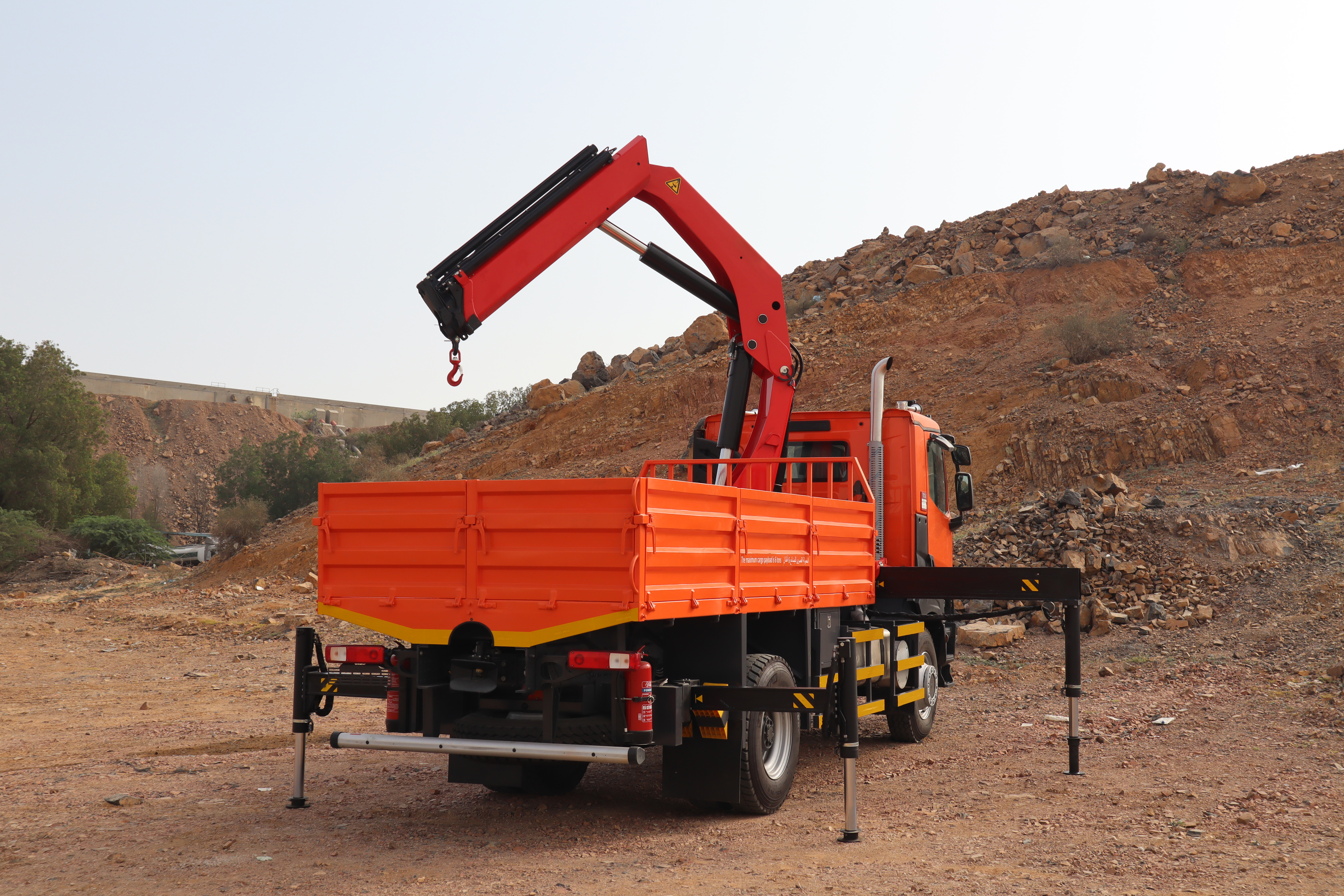

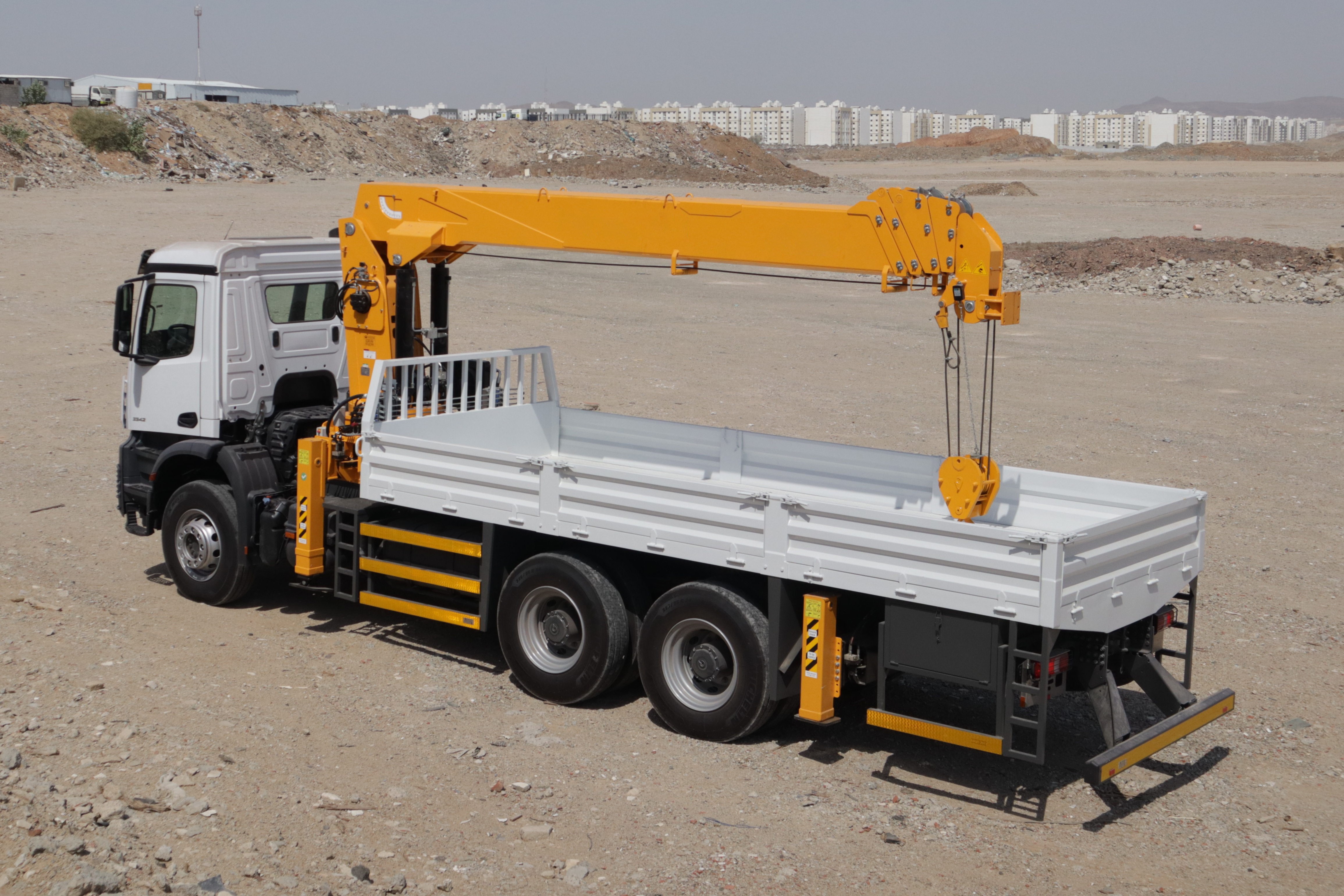
Telescopic Cranes
Consists of multiple interlocking sections that extend hydraulically to reach
the required height.
Winch System
A sturdy wire cable extending through pulleys at the end of the boom to lower
and lift loads vertically with high precision.
Hydraulic Outriggers
Arms that deploy laterally and downward to lift the truck off the ground and
provide a wide stability base during lifting operations.
Truck Mounting Types
Behind the Cab:
Provides balanced weight distribution while leaving the rear truck bed
available for material transport.
Rear-Mounted:
The crane is mounted at the rear of the truck bed to provide a longer reach
behind the vehicle during job site operations.
Operational Features
- Rapid Mobility:
Legal and high-speed transit on regular roads and highways without the need
for specialized logistics carriers. - Quick Setup:
Deployment of outriggers and boom extension takes only a few minutes to
start working immediately. - Direct Vertical Lifting:
Ideal for lowering loads into open excavations or high-elevation areas
(such as building rooftops).
Technical Specifications
Standard Weights
| Category / Classification | Crane Height | Crane Weight (Capacity) | Suggested Trucks | Common Jobs |
|---|---|---|---|---|
| Light | 10 meters to 18 meters | 2 tons to 5 tons | Isuzu NPR, Mitsubishi Fuso, or light trucks | Lifting generators and light equipment onto low building rooftops |
| Medium | 10 meters to 22 meters | 6 tons to 12 tons | Mercedes Actros 6×4, MAN, or Manovar | Lifting building materials (steel, ready-mix concrete) and transporting machinery to factories and workshops |
| Heavy | 10 meters to 32 meters | 13 tons to 20 tons | From 20 tons to 13 tons (heavy) |

